
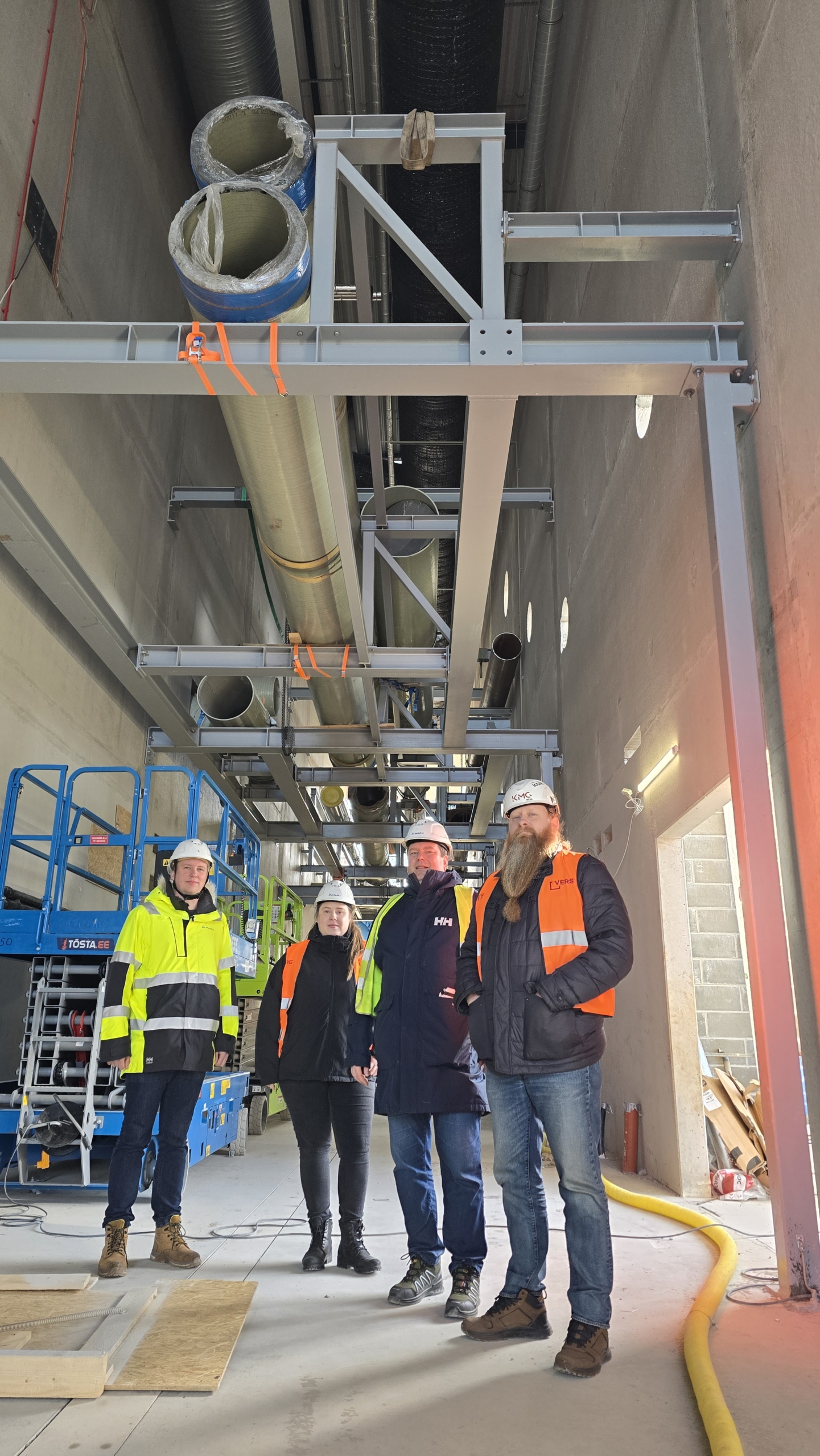
On the Paljassaare Peninsula in Tallinn, construction of Utilitas’s new emission-free heat pump plant is progressing rapidly. This is Estonia’s first wastewater and seawater heat pump plant, where Maru Metall was responsible for the design, manufacture, and delivery of the plant’s steel structures.
For Maru Metalli, the greatest engineering challenge lay within the building itself. During the design phase, it became clear that the load-bearing steel frame was the simpler part of the steel structure manufacturer’s work on this massive building, explained Madis Tuuling, a member of Maru Metalli’s management board. According to him, the real challenge lay in designing a complex network of support structures for the piping system, which had to accommodate state-of-the-art Friotherm AG heat pumps and the extensive piping required for them.
Once completed, the plant will cover nearly one-fifth of Tallinn’s district heating network’s annual heat consumption. Utilitas began construction of the wastewater and seawater heat pump plant and seawater pumping station in Paljassaare in May 2025. The zero-emission plant will begin supplying heat to Tallinn’s district heating network in the fall and winter of 2026. Once the plant is completed, CO₂ emissions from Tallinn’s heat supply are estimated to decrease by 100,000 metric tons per year, and the share of fossil fuels will fall below 10 percent.
For Maru Group, participation in the Paljassaare project is a natural continuation of its previous strategic energy projects. For example, we have previously built all three synchronous compensator stations operating in Estonia, which are critical for ensuring the stability of the Estonian power grid.
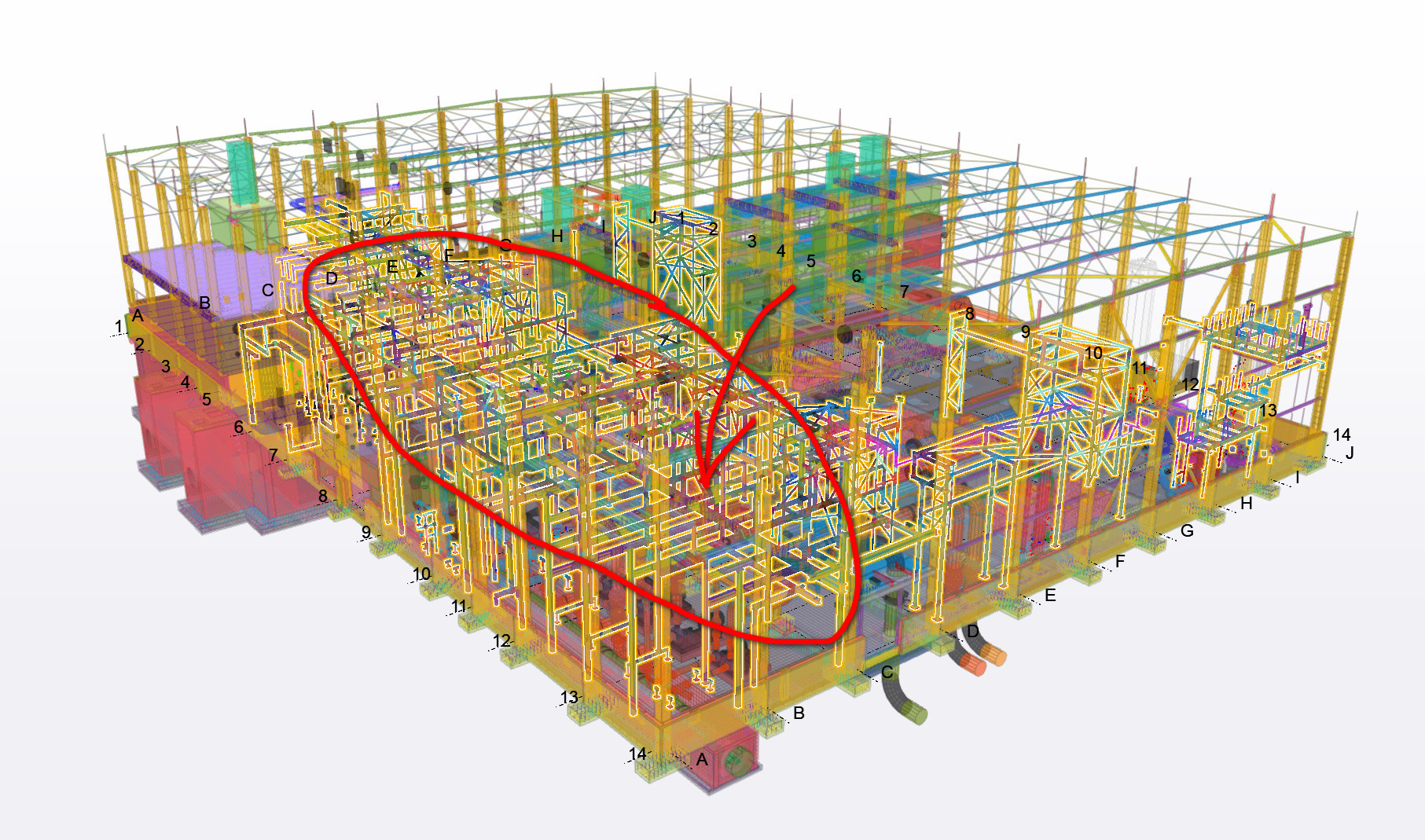
Location of the pipe support calculation model and pipe support design.