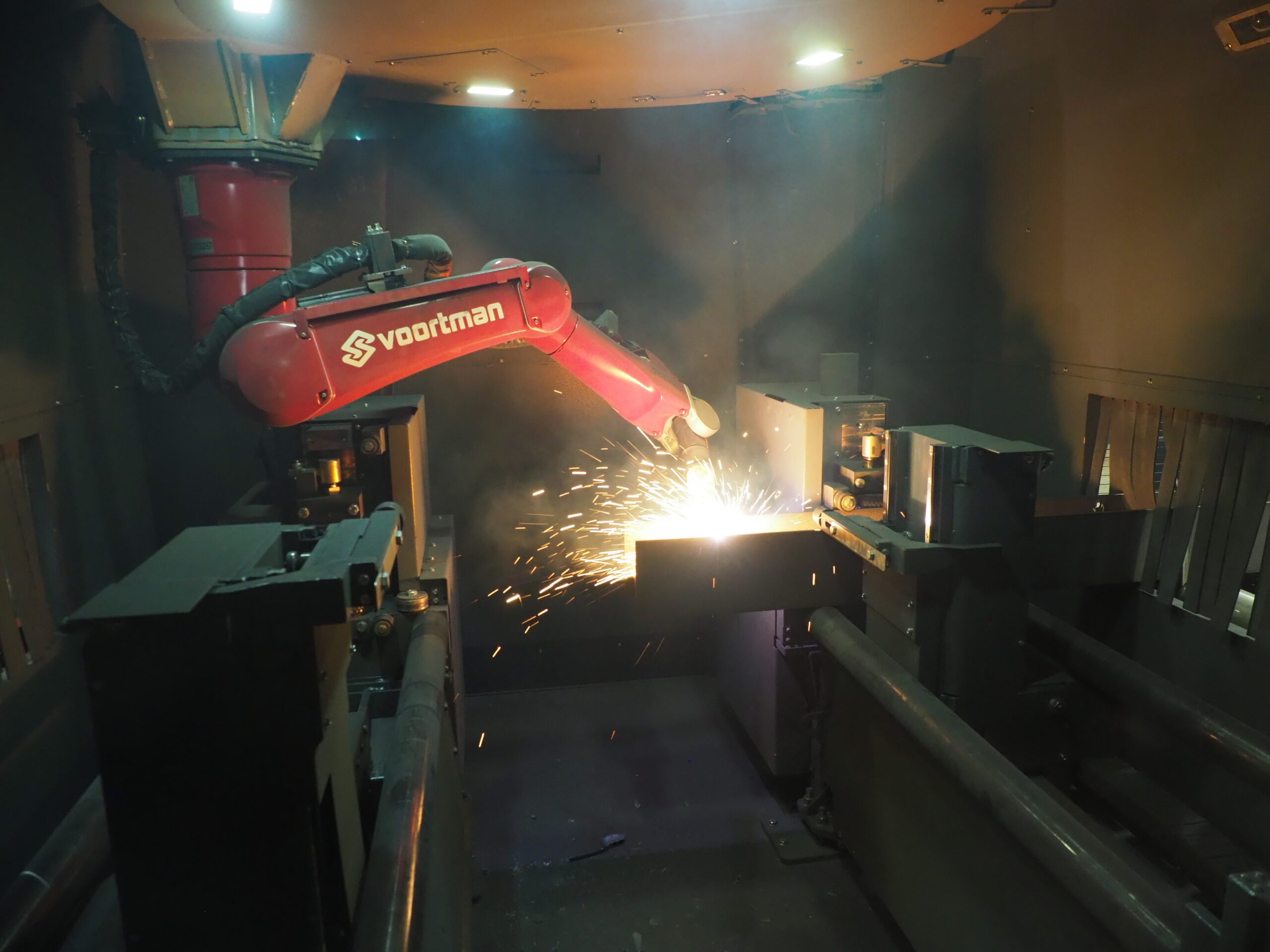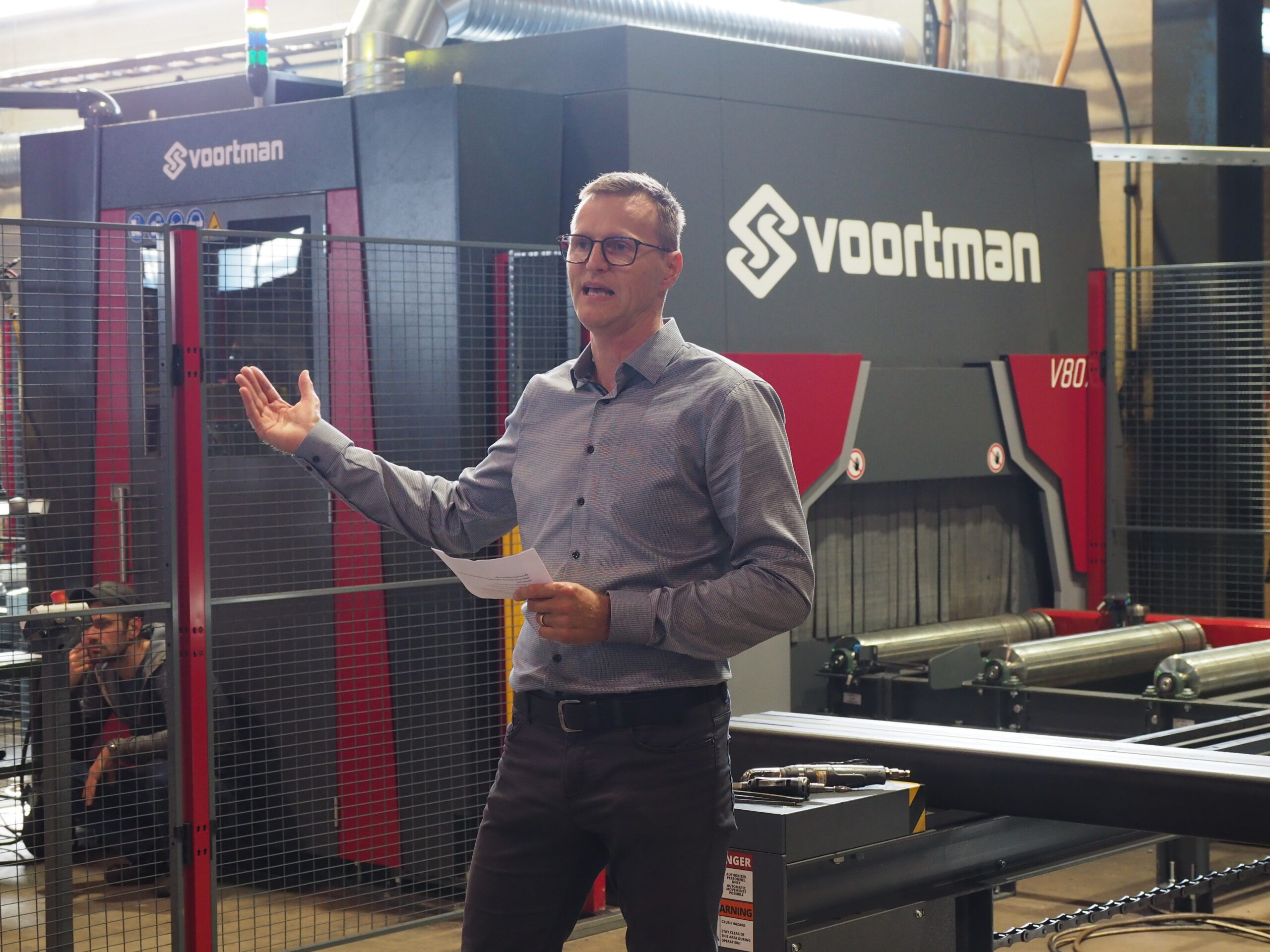
Maru Metall, a manufacturer of steel structures, has commissioned a Voortman V807 robotic profile processing line at its Ardu plant, at a cost of nearly one million euros. According to the company, it is currently the only machine of its kind in Estonia.
The goal of the investment is to integrate design and production into a more comprehensive digital workflow, reduce manual operations in the pre-processing of profiles, and improve the factory’s working environment. The new line is capable of processing structural steel profiles up to 15 meters in length, with a maximum cross-sectional dimension of 1,100 millimeters.
“We didn’t just invest in a new cutting machine. Our goal is to take the geometry created in the designer’s model as directly as possible into production and eliminate manual measurement, template fabrication, and various intermediate operations,” said Heiti Zukovits, Chairman of the Board at Maru Metalli. “The robotic line gives designers more freedom and makes the production of complex steel parts more manageable, repeatable, and efficient.”
Designed for processing large structural steel sections
Fast and precise laser profile cutting machines are already in use in Estonia, but the main difference with Maru Metalli’s new line lies in the size of the profiles it can process. The V807 is designed for processing load-bearing structural steel profiles, and its processing capabilities allow for the automation of profiles over one meter in length.
Maru Metall can process HEA, HEB, IPE, UPE, and UNP sections up to 15 meters in length, as well as RHS and SHS tubes, L-sections, and flat bar. The long workpiece allows for optimal placement of parts by project or profile group and minimizes material waste.
Robotic plasma cutting allows you to perform the following in a single automated workflow:
- straight and complex-shaped end cuts;
- cutouts and openings;
- openings and elongated openings;
- the steps required to prepare welded joints;
- assembly markings on ribs and connecting parts;
- machining of the profile on all four sides without having to turn it manually.
Using assembly markings, the locations of the ribs and connection details specified by the designer in the digital model are transferred directly to the profile. This reduces the need for manual measurements during assembly, speeds up the placement of components, and minimizes the risk of errors and rework.
The Next Stage of Automation
Maru Metalli began automating its profile processing as early as 2009, when the company purchased a Kaltenbach automatic drilling and sawing center. This made it possible to quickly and accurately produce large quantities of drilled steel profiles, giving the company a significant competitive advantage in carrying out such projects. The new robotic line complements the existing capabilities. During production preparation, the most suitable processing path can be selected for each part, and, if necessary, the strengths of both machines can be utilized.
“Kaltenbach continues to ensure fast cutting and high-precision drilling. The V807 adds the freedom to machine complex workpiece geometries that previously required multiple machining steps and a high degree of manual labor,” explained Zukovits. “We no longer have to choose between fast, precise drilling and flexible geometry. Now we have both capabilities.”
Investment in the Workplace
One of the main goals of the investment was to improve the work environment. Previously, complex cutouts and other profile machining operations had to be performed using a handheld plasma cutter in the production building, near other workstations. Limiting the spread of cutting fumes and airborne particles generated by plasma cutting was a constant challenge for the company.
In the V807, plasma cutting takes place in a separate, automated processing chamber. Cutting fumes are removed at the source and directed through a filtration system. As a result, the need for manual plasma cutting is significantly reduced, employee exposure to cutting fumes is minimized, and air quality throughout the production area is improved. “This isn’t just an investment in productivity. We are shifting a large portion of the plasma work that was previously done manually to an automated process that is isolated from and controlled by the operator. Therefore, it is simultaneously an investment in quality, in our people, and in the next stage of Maru Metalli’s development,” said Zukovits.
For the customer, this new capability means a shorter and more manageable production process, more consistent quality, a lower risk of errors, and greater freedom in the design of steel structures and joints.
The investment was co-financed by the European Union’s Cohesion Fund as part of the project “Maru Metall AS Resource Efficiency Investments.” The project grant amounts to 380,002.50 euros, and the grant is administered by the Environmental Investment Center.
Maru Metall is one of Estonia’s leading manufacturers and exporters of steel structures. The company’s production facility is located at the Ardu plant in Harju County. Maru Metall manufactures CE-marked steel structures up to execution class EXC3, and the company holds an EPD (Environmental Product Declaration) describing the environmental impact of its products.
Additional information: Heiti Zukovits, Chairman of the Board of Maru Metalli, tel. +372 509 2599, e-mail